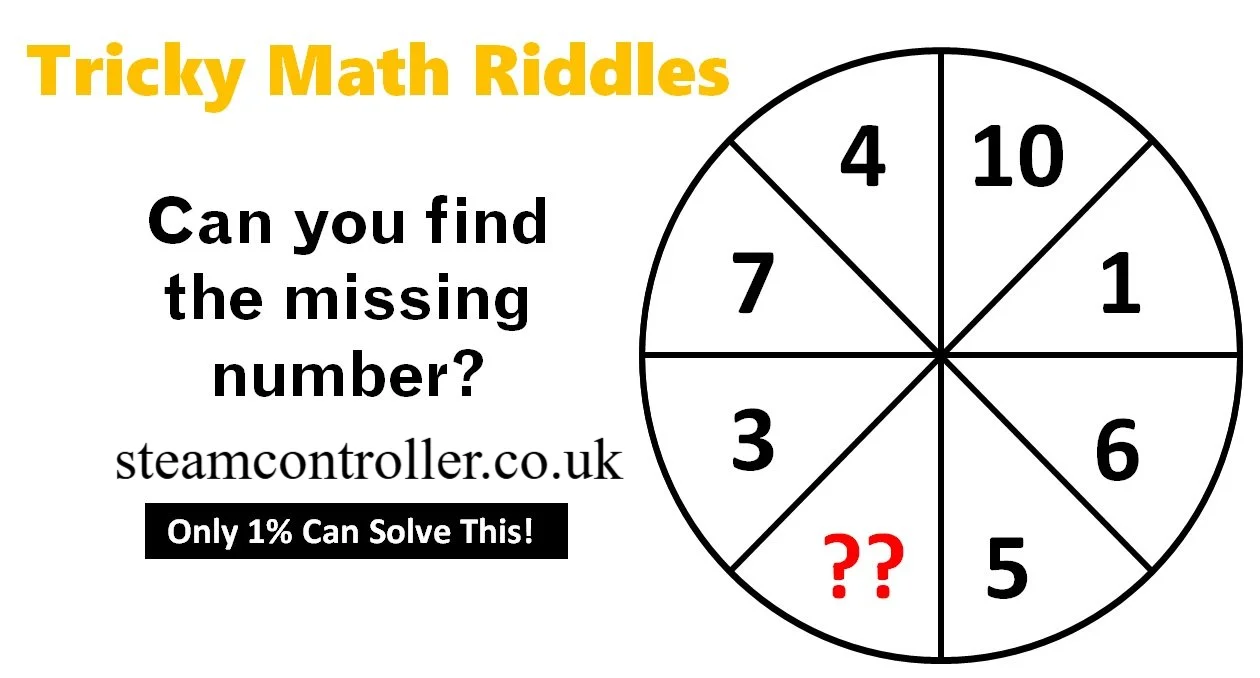
Math is more than numbers, formulas, and calculations. It can also be an exciting way to challenge your mind, discover hidden patterns, and solve unexpected problems. Math brain teasers turn ordinary mathematical concepts into entertaining challenges that encourage people to think creatively and approach problems from different angles.
Whether you enjoy simple number games or complicated logical questions, these puzzles offer something for everyone. From children learning basic arithmetic to adults looking for a mental workout, solving tricky questions can make mathematics more enjoyable. In this guide, you will discover different puzzle types, helpful solving strategies, and interesting challenges with answers.
What Are Math Brain Teasers and How Do They Work?
Math brain teasers are interesting puzzles that use numbers, calculations, patterns, and logical reasoning to challenge the mind. Unlike traditional mathematics exercises, they often require creative thinking rather than following a familiar formula. Some questions appear complicated at first, but their solutions may become surprisingly simple when you identify the right clue.
These puzzles can involve addition, subtraction, multiplication, division, geometry, or everyday situations. Some use missing numbers, while others present unusual questions that require careful observation. The main objective is to encourage readers to analyze information, recognize relationships, and discover solutions through logical thinking.
sourecs: popularmechanics.com
Benefits of Solving Math Brain Teasers
Solving puzzles regularly can provide an enjoyable way to practice different thinking skills. These activities encourage people to examine information carefully, recognize patterns, and consider alternative solutions. They can also make mathematics feel less intimidating by presenting familiar concepts in entertaining formats.
Another advantage is that puzzles encourage patience and concentration. Instead of immediately looking for an answer, readers learn to break problems into smaller steps and test their ideas. Although puzzles alone cannot guarantee improvements in memory or intelligence, they provide useful opportunities to practice reasoning and problem-solving.
Improves Logical Thinking
Many puzzles require readers to identify relationships between numbers and recognize patterns that are not immediately obvious. Working through these challenges encourages structured thinking and helps people understand how different pieces of information connect.
Strengthens Problem-Solving Abilities
Some questions have multiple possible approaches, encouraging readers to experiment with different methods. This process develops flexibility and teaches people to look beyond their first assumption when searching for an answer.
Boosts Memory and Concentration
Remembering numbers, following instructions, and tracking calculations require attention. Regular puzzle activities provide opportunities to practice concentration while keeping the learning experience interesting and interactive.
Makes Learning Math Enjoyable
Traditional exercises can sometimes feel repetitive, especially for younger learners. Turning calculations into games and challenges makes mathematical practice more engaging and encourages children to explore numbers with curiosity.
Easy Math Brain Teasers for Beginners
Beginners can start with simple questions involving basic arithmetic and number patterns. These activities are suitable for children, students, and adults who want to enjoy a relaxed mental challenge. The goal is to understand the question, identify the relevant information, and calculate the answer without rushing.These simple examples demonstrate how basic calculations can become entertaining challenges. As your confidence increases, you can move toward puzzles involving multiple steps and more complicated patterns.
Tricky Math Brain Teasers to Challenge Your Mind
More difficult puzzles require careful observation and a stronger understanding of mathematical relationships. They may combine several operations, introduce unexpected conditions, or encourage readers to question assumptions. These challenges are particularly enjoyable for people who already understand basic arithmetic.
Math Brain Teasers for Adults With Answers
Adults often enjoy puzzles that require several reasoning steps, practical calculations, or a little lateral thinking. These challenges can involve ages, money, percentages, and mathematical relationships found in everyday situations.These questions demonstrate why careful reading is just as important as mathematical knowledge. A small detail can completely change the solution.
Kids Brain Teasers: Fun Math Puzzles for Children
Children can develop an interest in mathematics through playful challenges that involve counting, shapes, numbers, and simple calculations. Age-appropriate puzzles help introduce mathematical ideas without making learning feel like a difficult classroom assignment.
Parents and teachers can use these activities during study sessions, classroom games, or family entertainment. Younger children can begin with counting and addition, while older students can explore multiplication, number sequences, and simple logic questions.
- What number comes after 15, 20, 25, and 30? Answer: 35.
- If you have 12 candies and share them equally among four friends, how many does each friend receive? Answer: 3.
- How many sides do three triangles have altogether? Answer: 9.
- What is half of 100 plus 10? Answer: 60.
Visual Brain Teasers and Number Pattern Puzzles
Visual puzzles use shapes, pictures, symbols, and number arrangements to create interesting mathematical challenges. Instead of relying entirely on written calculations, readers must observe the information presented and identify hidden relationships.
For example, a puzzle might show three rows of objects with different numerical values. The challenge is to determine the value of the final row by understanding the pattern. Other activities involve missing numbers in grids, geometric shapes, or counting triangles within a larger figure.
To solve these puzzles effectively, examine every symbol carefully. Check whether objects have different quantities, sizes, or positions. A small visual difference can change the entire calculation, making observation an important part of the process.
Word Brain Teasers and Mathematical Riddles
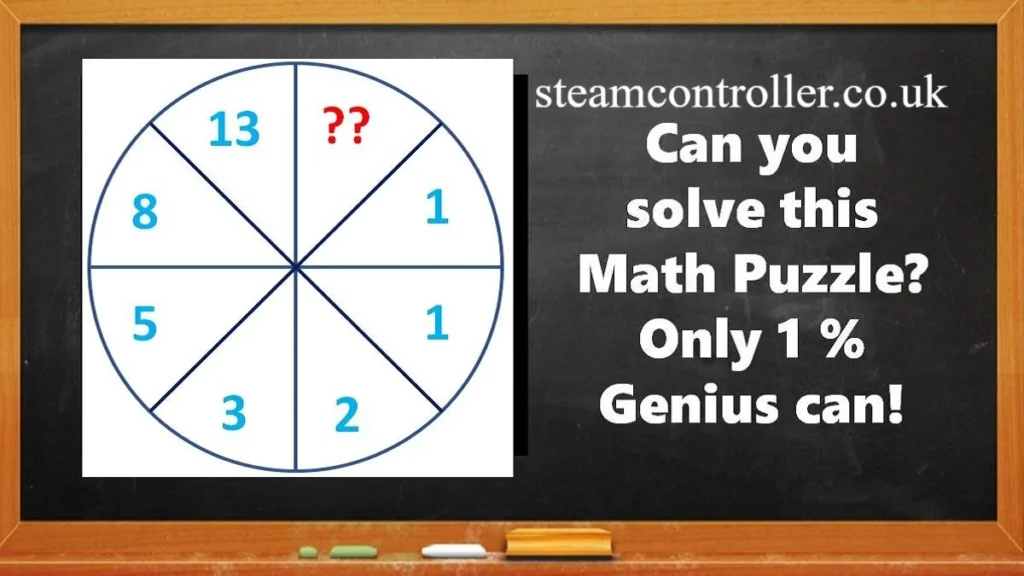
Word puzzles combine mathematical reasoning with language-based clues. They often describe everyday situations involving people, money, distances, ages, or time. Readers must understand the wording before deciding which calculations are necessary.
For example, consider this question: A basket contains six oranges. You take away two oranges. How many oranges do you have? The answer is two because those are the oranges you took. The wording changes how the question should be interpreted.
Word puzzles are particularly useful for practicing careful reading and logical reasoning. They also demonstrate that solving a problem is not always about performing complicated calculations. Sometimes understanding a sentence correctly is the most important step.
Brain Teasers Puzzles for Different Skill Levels
Not every puzzle needs to be difficult to be enjoyable. Some people prefer straightforward questions, while others enjoy spending several minutes working through complicated mathematical challenges. Organizing puzzles by difficulty helps readers find activities that match their experience.
Beginner puzzles generally involve counting, addition, subtraction, and simple number sequences. Intermediate challenges may include multiplication, percentages, missing values, and basic algebra. Advanced activities can introduce multi-step equations, probability, geometry, and more complex logical relationships.
Trying different brain teasers puzzles can also help readers discover which types they enjoy most. A balanced collection of numerical, visual, and word-based activities keeps the experience interesting and offers different kinds of mental challenges.
Funny Brain Teasers and Riddles for Entertainment
Mathematical puzzles do not always need to feel serious. Funny questions and unexpected answers can turn an ordinary activity into an entertaining experience. These challenges are ideal for family gatherings, classroom breaks, friendly competitions, and social activities.
For example, imagine asking someone how many months have 28 days. Many people immediately answer February, but the correct answer is all twelve months. Every month contains at least 28 days.
Another example asks: What becomes larger when you take something away from it? The answer is a hole. Although this is more of a word riddle than a mathematical puzzle, it demonstrates how unexpected reasoning can make brain teasers enjoyable.
Christmas Brain Teasers and Seasonal Math Challenges
Seasonal puzzles offer another creative way to enjoy mathematical activities. Christmas-themed challenges can involve counting decorations, calculating gift quantities, arranging holiday objects, or solving number patterns inspired by festive celebrations.
For example, imagine a Christmas tree decorated with four red ornaments, five gold ornaments, and three silver ornaments. How many ornaments are on the tree altogether? The answer is 12. More complicated versions can introduce multiplication, division, or missing-number challenges.
These activities are suitable for families, teachers, and children during the holiday season. They can also be turned into printable worksheets or friendly competitions that combine entertainment with educational practice.
Printable Brain Teasers: Practice Anywhere
Printable puzzles are convenient for people who prefer solving questions on paper rather than using a digital screen. They can be organized into worksheets, classroom activities, puzzle books, and individual challenge sheets. Readers can write calculations directly on the page and work through each problem at their own pace.
Parents and teachers can select printable activities according to age and difficulty. Younger learners may benefit from counting exercises and simple patterns, while older students can explore advanced calculations and logical questions. Including a separate answer sheet makes it easier to check solutions after completing the activity.
How to Solve Math Brain Teasers More Effectively
A good solving strategy can make even complicated questions easier to understand. Rather than guessing immediately, take a moment to examine the wording, identify important details, and determine what the question is actually asking.
- Read the entire question carefully before calculating.
- Identify the numbers and relationships provided.
- Break complicated problems into smaller steps.
- Look for repeating patterns and mathematical connections.
- Use drawings or diagrams when visualizing a problem helps.
- Check your calculations before selecting an answer.
- Try another method if your first approach does not work.
Common Mistakes to Avoid When Solving Math Puzzles
One common mistake is reading a question too quickly. Small words such as “remaining,” “twice,” “each,” and “altogether” can change the meaning of a problem. Taking time to understand the instructions prevents unnecessary confusion and helps readers choose the correct mathematical operation.
Another mistake is assuming that every difficult-looking question requires a complicated formula. Many puzzles are designed around simple patterns or unexpected interpretations. Readers should also avoid ignoring the order of operations, overlooking visual details, and accepting an answer without checking whether it satisfies the original conditions.
Conclusion
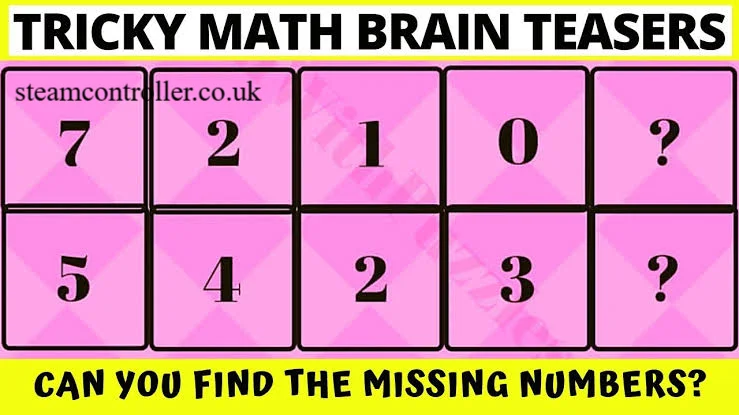
Math brain teasers provide an enjoyable way to explore numbers, patterns, logic, and creative problem-solving. From beginner-friendly arithmetic questions to challenging puzzles for adults, these activities offer something for people with different ages and skill levels.
Exploring visual challenges, word riddles, printable activities, and mathematical puzzles can make learning more interesting. The most important part is to stay curious, read questions carefully, and enjoy discovering the reasoning behind each solution. Start with simple challenges, gradually increase the difficulty, and make puzzle-solving a fun part of your daily routine.
Frequently Asked Questions (FAQs)
What are math brain teasers?
They are entertaining mathematical puzzles that challenge people to use numbers, patterns, calculations, and logical reasoning to discover answers.
How do math brain teasers improve problem-solving skills?
They encourage people to analyze information, recognize patterns, consider different approaches, and work through problems step by step.
Are math brain teasers suitable for kids?
Yes. Simple, age-appropriate puzzles help children practice counting, arithmetic, pattern recognition, and logical reasoning in an enjoyable way.
What is the difference between math puzzles and brain teasers?
Math puzzles generally focus on mathematical calculations and concepts, while brain teasers can also involve wordplay, visual clues, and unexpected logical solutions.
How can I solve difficult math brain teasers quickly?
Read the question carefully, identify important clues, break the problem into smaller steps, and check whether a simple pattern explains the answer.
Where can I find printable brain teasers?
You can find printable activities on educational websites, puzzle platforms, and mathematics learning resources. Choose worksheets that match your preferred difficulty level.
Are visual brain teasers good for improving logical thinking?
Visual puzzles provide opportunities to practice observation, pattern recognition, spatial reasoning, and logical thinking through pictures, shapes, and number arrangements.
Also Read