Introduction
Have you ever played a game and thought, “I actually want to keep talking to the villain”? That is exactly what Vaas Montenegro does to you. From the moment he appears on screen in Far Cry 3, you cannot look away. He is charismatic, terrifying, and somehow deeply human all at once.
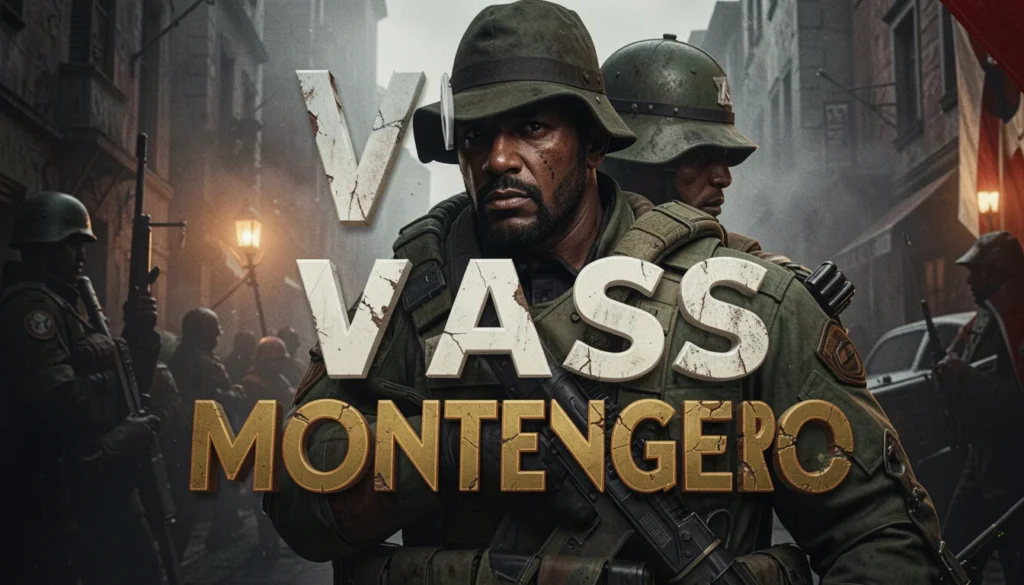
Vaas Montenegro is the primary antagonist of Far Cry 3, released by Ubisoft in 2012. He is a pirate warlord who operates on the Rook Islands and serves under the drug lord Hoyt Volker. But calling him just a “villain” feels like an understatement. He is a cultural phenomenon.
In this article, you will learn everything about Vaas — his backstory, his psychology, his iconic scenes, and why he continues to resonate with millions of players over a decade later. Whether you are a longtime fan or just curious about why everyone keeps quoting his lines, this guide has you covered.
Who Is Vaas Montenegro? A Character Overview
Vaas Montenegro is voiced and motion-captured by actor Michael Mando, who later gained mainstream fame in Better Call Saul. Mando’s performance is largely responsible for turning what could have been a standard game villain into a fully realized, chilling human being.
Vaas grew up on the Rook Islands. He was once a member of the native Rakyat tribe, where he was considered a warrior of great promise. He was even a student of Citra, the tribe’s spiritual leader, who also happens to be his sister. That relationship is central to understanding his tragedy.
Everything changed when Hoyt Volker arrived on the islands. Hoyt was a powerful crime lord who turned the islands into a hub for drug trafficking, piracy, and the slave trade. Vaas fell under his influence, and over time, the promising young warrior became the brutal pirate lord players encounter in the game.
I find it fascinating that Vaas is technically not the final boss of Far Cry 3. He dies midway through the story. Yet he overshadows every other character in the game, including the actual main antagonist. That says everything about what a well-written character can do.
Vaas Montenegro’s Role in the Story
When protagonist Jason Brody and his friends arrive on the Rook Islands for a skydiving trip, Vaas captures them. His plan is to ransom them to their wealthy American families. Jason escapes and, guided by the Rakyat tribe, goes on a mission to rescue his friends and ultimately confront Vaas.
Throughout the first half of the game, Vaas serves as the constant, looming threat. He appears at key moments, delivering monologues that are equal parts terrifying and hypnotic. He never feels like a background villain. He feels personal.
The Definition of Insanity Monologue: Why It Still Hits Hard
Ask any Far Cry 3 player about Vaas Montenegro, and they will immediately quote one thing: his definition of insanity speech. In it, Vaas tells Jason that the definition of insanity is doing the same thing over and over again and expecting a different result.
The speech is not just memorable. It is psychologically layered. Vaas is describing himself as much as he is lecturing Jason. He is a man trapped in cycles he cannot break. He works for Hoyt, repeating the same brutal routine, yet somehow believing things will get better or that he will eventually be free.
The monologue works because it is delivered with such raw intensity. Michael Mando does not recite the lines. He lives them. You can feel the exhaustion, the anger, and the strange self-awareness underneath every word.
“Did I ever tell you what the definition of insanity is?” That line launched a thousand memes — but underneath the meme is a genuinely profound piece of writing about a man who knows he is trapped but cannot stop.
2012 Year Far Cry 3 released
#1 Best video game villain (multiple polls)
10M+ Far Cry 3 copies sold
4.9★ Michael Mando’s performance rating
The Psychology of Vaas Montenegro: Understanding the Madness
One of the reasons Vaas Montenegro resonates so deeply is that his madness is not random. It has roots. It has causes. When you understand his background, his behaviour shifts from pure evil to something much more tragic.
The Cycle of Abuse and Manipulation
Vaas grew up in a violent environment on the Rook Islands. His relationship with Hoyt Volker is that of a manipulated subordinate. Hoyt exploits Vaas’s skills and loyalty while keeping him dependent, violent, and unstable. Vaas is, in many ways, Hoyt’s weapon.
At the same time, Vaas was never fully part of the Rakyat tribe either. His sister Citra holds deep power over him. Their relationship is complex, blending familial love with control and resentment. Vaas exists between two worlds and belongs fully to neither.
Trauma and the Loss of Identity
Game writers and psychology researchers who have studied Vaas’s character note that he exhibits traits consistent with dissociation and identity fragmentation. He knows, on some level, who he once was. He even references this in moments of unexpected vulnerability.
When he tells Jason about the definition of insanity, he is not just taunting his prisoner. He is confessing. He is describing his own inability to escape the loop he is locked in. That self-awareness is what makes him terrifying. He sees it. He just cannot stop it.
Charisma as a Survival Mechanism
Vaas leads an army of loyal pirates. His charisma is not incidental. It is a tool. His unpredictability keeps followers in line through fear. His humour and wit keep them engaged. He is the kind of leader people follow not because they trust him, but because they are afraid to look away.
Vaas Montenegro vs. Other Far Cry Villains: Who Stands Tallest?
The Far Cry franchise has produced many memorable antagonists. Pagan Min in Far Cry 4, Joseph Seed in Far Cry 5, and Anton Castillo in Far Cry 6 all have their fans. But most players and critics agree that Vaas Montenegro sits at the top of the list.
Here is why Vaas outperforms the competition:
- Screen presence: Every scene with Vaas demands your full attention. Other Far Cry villains are interesting. Vaas is magnetic.
- Complexity: He has a backstory that explains but does not excuse his behaviour. This balance is hard to achieve in any medium.
- Performance: Michael Mando brought something extraordinary to the role. The physicality, the vocal delivery, and the emotional range set a new benchmark.
- Dialogue: His lines are quotable not because they are flashy, but because they are genuinely insightful in a twisted way.
- Unpredictability: You never know what Vaas will do next. That tension keeps every encounter with him genuinely stressful.
Pagan Min is charming. Joseph Seed is menacing in a cult-leader way. But neither of them makes you feel what Vaas makes you feel — that mix of fear, fascination, and reluctant admiration.
Michael Mando: The Man Behind the Monster
You cannot talk about Vaas Montenegro without talking at length about Michael Mando. The Canadian-Mexican actor brought an extraordinary level of commitment to the role. He did not just provide voice acting. He performed every scene through motion capture, giving Vaas a physicality that few video game characters have ever had.
Mando has spoken in interviews about drawing on personal experiences and deep character research to build Vaas from the ground up. He worked closely with the development team at Ubisoft Montreal to understand the character’s arc and psychology before a single scene was recorded.
The result is one of the most convincing villain performances in the history of the medium. Mando received widespread industry recognition for his work. When he later appeared in Breaking Bad’s spin-off Better Call Saul, many viewers recognized him immediately as the voice of Vaas — a testament to how deeply that performance left its mark.
If you want to understand just how good Mando’s performance is, try watching the motion capture sessions that Ubisoft released. Seeing the performance stripped of the game’s visuals makes the emotional depth even more striking.
Vaas Montenegro’s Return: Far Cry 6 DLC
Ubisoft clearly understood that fans were not done with Vaas Montenegro. In 2021, they released a downloadable content expansion for Far Cry 6 titled “Vaas: Insanity.” This DLC puts you inside Vaas’s mind as he fights through a psychological landscape shaped by his memories, traumas, and fears.
The DLC is a roguelike experience, which divided fans. Some loved the experimental format. Others felt it did not give Vaas the in-depth narrative treatment he deserved. But one thing nearly everyone agreed on: Michael Mando’s performance remained as compelling as ever.
What the DLC Reveals About Vaas
The Vaas: Insanity DLC gives players a deeper look into his internal world. You see fragments of his childhood. You face manifestations of Hoyt and Citra as psychological forces. The experience reinforces the idea that Vaas is not simply evil but profoundly broken.
The DLC ends on an ambiguous note that sparked significant fan discussion. Whether you read it as Vaas dying, achieving some kind of peace, or escaping into another plane of existence is largely up to interpretation. That ambiguity feels right for a character who was always defined by contradictions.
Why Vaas Montenegro Still Matters in 2026
More than a decade after Far Cry 3’s release, Vaas Montenegro continues to appear in discussions about the best video game writing, the best villain performances, and the best character work in interactive entertainment. This is not nostalgia. This is recognition of genuine quality.
Here is what his lasting impact looks like:
- He appears on nearly every “greatest video game villains” list published in the industry.
- His monologue has been referenced in academic discussions about character writing and psychology in games.
- Cosplay of Vaas is still common at gaming conventions around the world.
- Game developers continue to cite him as a benchmark when discussing antagonist design.
- His DLC in Far Cry 6 proved that audience demand for the character never faded.
Vaas also changed what players expect from video game villains. Before Far Cry 3, it was acceptable for a game’s antagonist to be a shadowy presence or a generic power-hungry figure. Vaas proved that players want depth. They want to understand the villain. They want to feel something complicated when they encounter them.
Lessons Game Writers Can Learn from Vaas Montenegro
If you are a writer, game developer, or just someone interested in storytelling, Vaas Montenegro is a masterclass worth studying. Here are the key lessons his character offers:
1. Give Your Villain a Reason
Vaas is not evil because the story needs an evil character. He is broken because of specific, traceable experiences. His relationship with Hoyt, his estrangement from the Rakyat, his connection to Citra — every piece of his behaviour has a source.
2. Let the Villain Be Right Sometimes
When Vaas talks about insanity, he is describing something real. When he mocks Jason’s naivety, he is often correct. Letting a villain make valid points creates genuine moral tension and makes the story richer.
3. Invest in Performance
Vaas would not work without Michael Mando. The writing is excellent, but the performance transforms it. Great character writing and great performance are multiplicative, not additive.
4. Less Is More
Vaas dies midway through the game. He does not overstay his welcome. His impact is concentrated into a smaller number of scenes, which makes each one more powerful.
5. Ambiguity Creates Depth
You never get a full explanation of Vaas. His relationship with Citra is never fully defined. His interior emotional life is only glimpsed. That incompleteness invites players to think, theorize, and engage long after the credits roll.
Final Thoughts on Vaas Montenegro
Vaas Montenegro is more than a video game character. He is proof of what the medium can achieve when writers, performers, and developers all commit to something truly ambitious. He is terrifying and tragic in equal measure. He is a warning and a reflection.
The reason you remember him, the reason players are still quoting his lines over a decade later, is simple. He felt real. Not real in a literal sense, but real in the way that great fiction always feels real — because somewhere in his confusion, his anger, and his impossible self-awareness, you recognized something true about human nature.
If you have never played Far Cry 3, play it. If you have, consider revisiting it. And if you have a favourite Vaas moment or theory, share it — because the conversation around this character is still very much alive. What do you think truly drove Vaas to his breaking point?
Frequently Asked Questions
Who voices Vaas Montenegro in Far Cry 3?
Is Vaas Montenegro the main villain of Far Cry 3?
What is Vaas Montenegro’s famous quote?
Does Vaas Montenegro appear in Far Cry 6?
What tribe does Vaas Montenegro belong to?
Why is Vaas Montenegro considered the best Far Cry villain?
How does Vaas Montenegro die in Far Cry 3?
What is the relationship between Vaas and Citra?
Was Vaas Montenegro based on a real person?
Will Vaas Montenegro appear in future Far Cry games?
Also Read In steamcontroller.co.uk
Email: johanharwen314@gmail.com
Author Name: Hamid Ali
About The Author: Hamid Ali is a content writer and gaming enthusiast with over eight years of experience covering video game culture, character analysis, and interactive storytelling. He specializes in breaking down complex narratives and making them accessible to both casual players and hardcore fans. When he is not writing, you will find him replaying classic titles and hunting for the next great villain monologue.