Introduction
Converting millimeters into inches is a common task in construction, woodworking, engineering, home improvement, and everyday measurements. Since different countries and industries use different measurement systems, understanding how to switch between metric and imperial units can make projects easier and more accurate. Even a small measurement can matter when selecting tools, checking product dimensions, or following technical instructions.
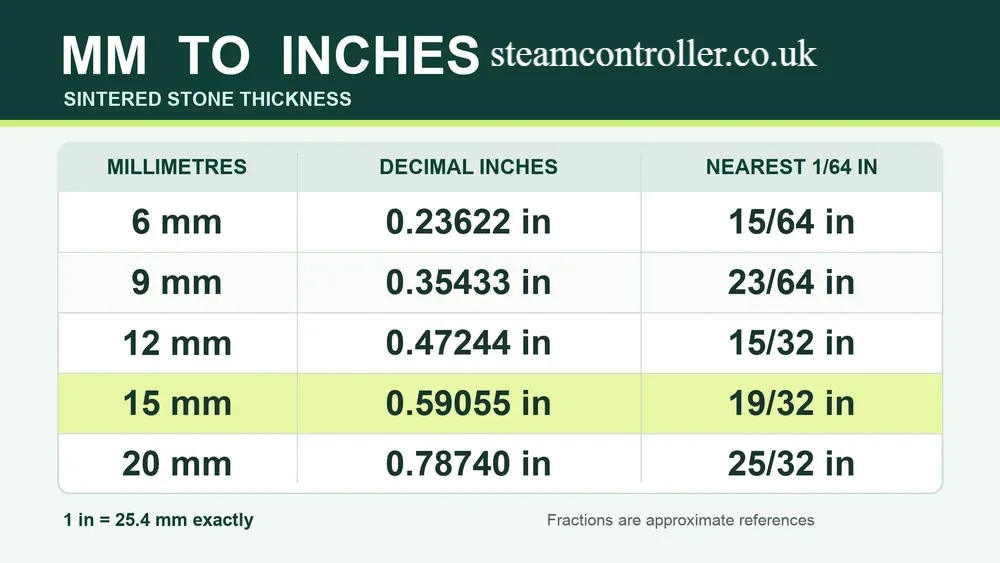
If you are wondering how much 12 mm to inches equals, the answer is approximately 0.4724 inches. This measurement is slightly smaller than half an inch and is also close to 15/32 inches. In this guide, you will learn the exact conversion, the mathematical formula, fractional equivalents, and other useful millimeter-to-inch measurements.
What Is 12 mm in Inches?
12 millimeters equals approximately 0.4724 inches. This value comes from dividing the millimeter measurement by the standard conversion factor of 25.4. It provides a precise decimal result that can be useful for technical drawings, manufacturing measurements, home improvement projects, and other situations where accurate dimensions are important.
For everyday reference, this measurement is slightly less than half an inch. Although the difference may appear small, it can matter when working with closely fitted components or precision tools. Understanding the decimal equivalent makes it easier to compare metric measurements with rulers, measuring tapes, and equipment marked in inches.
| Measurement | Equivalent |
|---|---|
| Millimeters | 12 mm |
| Decimal inches | 0.47244 in |
| Rounded inches | 0.4724 in |
| Approximate fraction | 15/32 in |
| Comparison | Slightly less than 1/2 inch |
How to Convert 12 mm to Inches
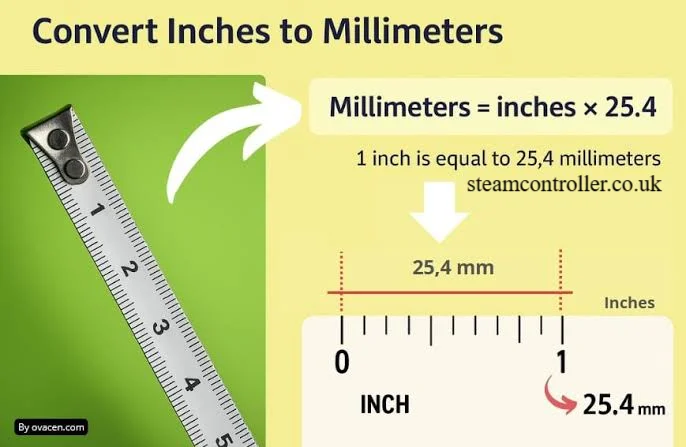
Converting millimeters into inches is straightforward once you understand the relationship between these two units. One inch is exactly equal to 25.4 millimeters. Therefore, you can convert any millimeter measurement into inches by dividing the original value by 25.4. This standard method works for small measurements as well as much larger dimensions.
To calculate the result, take 12 and divide it by 25.4. The answer is approximately 0.4724409 inches. When rounded to four decimal places, the result becomes 0.4724 inches. You can use this calculation whenever you need an accurate measurement without relying on an online conversion tool.
12 mm to Inches Conversion Formula
The standard formula for converting millimeters into inches is simple and easy to remember. Divide the millimeter value by 25.4 to get its equivalent in inches. This formula is universally applicable because the international definition of an inch is based on exactly 25.4 millimeters.
The general conversion formula is:
Inches = Millimeters ÷ 25.4
For example, if you want to convert 12 millimeters, substitute the measurement into the formula and perform the division. You will get approximately 0.4724 inches. The same calculation can be repeated for different measurements, making it useful for students, professionals, DIY enthusiasts, and anyone working with metric and imperial dimensions.
- Divide millimeters by 25.4 to get inches.
- Multiply inches by 25.4 to convert them into millimeters.
- Keep additional decimal places when precision is important.
- Round the final result according to your project’s requirements.
- Double-check measurements before cutting or fitting materials.
12 mm in Inches as a Fraction
Decimal measurements are useful for calculations, but fractional inches are often easier to understand when using traditional rulers and measuring tapes. The decimal value of 12 millimeters is approximately 0.47244 inches. When converted into a nearby fraction, it is closest to 15/32 of an inch when using a ruler marked in 1/32-inch increments.
It is important to understand that 15/32 inch is an approximation rather than an exact equivalent. Half an inch equals 0.5 inches, which is slightly larger than 12 millimeters. The difference may seem small, but it can affect measurements in woodworking, mechanical assembly, and other applications requiring accurate fitting.
| Measurement Type | Equivalent |
|---|---|
| Exact decimal calculation | 0.4724409 in |
| Rounded decimal | 0.4724 in |
| Nearest 1/32 fraction | 15/32 in |
| Half an inch | 0.5000 in |
Quick Millimeters to Inches Conversion Chart
A conversion chart is a convenient reference when you frequently work with different metric measurements. Instead of calculating every value manually, you can check a table to find the corresponding inch measurement. These charts are especially useful for construction workers, mechanics, engineers, hobbyists, and people completing household improvement projects.
The following table includes several commonly searched measurements and their approximate decimal equivalents. It also provides fractional references where useful. Remember that fractional values are rounded approximations, while decimal values are calculated using the standard 25.4 conversion factor.
| Millimeters | Inches (Decimal) | Approximate Fraction |
|---|---|---|
| 5 mm | 0.1969 | 13/64 |
| 6 mm | 0.2362 | 15/64 |
| 8 mm | 0.3150 | 5/16 |
| 12 mm | 0.4724 | 15/32 |
| 15 mm | 0.5906 | 19/32 |
| 16 mm | 0.6299 | 5/8 |
| 25 mm | 0.9843 | 63/64 |
| 30 mm | 1.1811 | 1 3/16 |
| 40 mm | 1.5748 | 1 37/64 |
| 50 mm | 1.9685 | 1 31/32 |
| 60 mm | 2.3622 | 2 23/64 |
| 100 mm | 3.9370 | 3 15/16 |
| 200 mm | 7.8740 | 7 7/8 |
| 300 mm | 11.8110 | 11 13/16 |
Common Millimeter to Inches Conversions
Different measurement sizes are used for different purposes, so knowing several common conversions can save time. For example, small millimeter values are frequently found in screws, bolts, fittings, and electronic components, while larger measurements are common in construction materials, furniture, and industrial equipment.
Understanding these conversions also makes it easier to compare product specifications when shopping online. Manufacturers may list dimensions in millimeters even when customers are more familiar with inches. The following examples explain some popular conversions and provide quick reference values.
sourecs: vedantu.com
5 mm to Inches
Five millimeters equals approximately 0.1969 inches. This is a relatively small measurement commonly encountered in hardware, small mechanical parts, and craft materials. It is close to 13/64 of an inch, making the fractional value useful when checking traditional measuring tools.
8 mm to Inches
Eight millimeters converts to approximately 0.3150 inches. It is slightly larger than 5/16 of an inch and is a common dimension in bolts, fittings, and various mechanical applications. Knowing this conversion can help when selecting compatible components.
15 mm to Inches
Fifteen millimeters equals approximately 0.5906 inches. It is slightly smaller than 5/8 of an inch. This conversion is useful when comparing metric hardware, building materials, and product dimensions with imperial measurements.
16 mm to Inches
Sixteen millimeters is approximately 0.6299 inches, which is very close to 5/8 of an inch. This measurement is commonly encountered in tools, fasteners, and mechanical equipment. Its fractional equivalent makes it relatively easy to identify on many measuring instruments.
25 mm to Inches
Twenty-five millimeters equals approximately 0.9843 inches. It is very close to one inch, although it is slightly smaller. This is a useful conversion to remember because 25.4 millimeters represents exactly one inch.
30 mm to Inches
Thirty millimeters converts to approximately 1.1811 inches. This measurement is greater than one inch and can be useful when comparing furniture dimensions, hardware components, and other everyday objects.
40 mm to Inches
Forty millimeters equals approximately 1.5748 inches. It is commonly useful for comparing metric product specifications with imperial measurements. Using the standard conversion formula ensures that the result remains accurate.
50 mm to Inches
Fifty millimeters equals approximately 1.9685 inches. This measurement is just slightly shorter than two inches. It can be useful in construction, manufacturing, and general product dimension comparisons.
60 mm to Inches
Sixty millimeters converts to approximately 2.3622 inches. This is a practical measurement for various household, industrial, and mechanical applications. Keeping the decimal value available helps avoid unnecessary rounding.
100 mm to Inches
One hundred millimeters equals approximately 3.937 inches. It is slightly shorter than four inches and is a common conversion in construction, woodworking, and product measurements. This value is particularly helpful when comparing metric rulers with imperial measuring tapes.
200 mm to Inches
Two hundred millimeters equals approximately 7.874 inches. This measurement is useful for larger components, furniture dimensions, and DIY projects. Dividing 200 by 25.4 gives the accurate decimal equivalent.
300 mm to Inches
Three hundred millimeters converts to approximately 11.811 inches. It is slightly shorter than one foot, which equals 12 inches. This conversion is useful when measuring longer materials and comparing metric specifications with imperial dimensions.
Where Is a 12 mm Measurement Commonly Used?
A 12-millimeter measurement can appear in several everyday and professional applications. It may describe the thickness of a material, the diameter of a component, the width of a fitting, or another physical dimension. The exact application depends on the object being measured, so it is important to check whether the specification refers to length, width, thickness, or diameter.
In woodworking and construction, metric dimensions are frequently used for boards, hardware, accessories, and building materials. Mechanics may also encounter millimeter measurements when selecting tools or checking machine components. Understanding the inch equivalent makes it easier to work with equipment and instructions that use different measurement systems.
- Woodworking and furniture construction.
- Mechanical parts and hardware fittings.
- Home improvement and renovation.
- Manufacturing and engineering drawings.
- Craft projects and material measurements.
- Comparing imported product specifications.
Millimeters vs. Inches: Understanding the Difference
Millimeters and inches are both units used to measure length, but they belong to different measurement systems. Millimeters are part of the metric system, which is widely used around the world. Inches belong to the imperial and US customary measurement systems and are commonly used in the United States and certain industries elsewhere.
The main difference is their relationship to larger measurement units. There are 1,000 millimeters in one meter, while 12 inches make one foot. One inch equals exactly 25.4 millimeters, providing a fixed conversion relationship between the two systems. Understanding this relationship makes switching between metric and imperial measurements much easier.
For example, a measurement of 25.4 millimeters is exactly one inch. Similarly, 50.8 millimeters equals exactly two inches. These reference points can help you estimate measurements quickly without performing a calculation every time.
Common Mistakes When Converting Millimeters to Inches
Although converting millimeters into inches is straightforward, small mistakes can produce inaccurate results. One common error is dividing by the wrong number. The correct conversion factor is 25.4, not 2.54, when converting directly from millimeters to inches. Confusing millimeters with centimeters can also lead to incorrect measurements.
Another mistake is rounding the result too early. Keeping additional decimal places during calculations helps maintain accuracy, especially when working with multiple measurements. It is also important not to treat a nearby fractional measurement as an exact equivalent. A fraction such as 15/32 inch is a practical approximation, not an identical value.
- Always use 25.4 as the conversion factor.
- Check whether the original measurement is in millimeters or centimeters.
- Avoid rounding intermediate calculations.
- Clearly distinguish decimal inches from fractional inches.
- Verify critical dimensions with a suitable measuring tool.
Tips for Getting Accurate Millimeter to Inch Conversions
Accuracy is especially important when measurements affect the fit, safety, or performance of a finished product. Using a consistent conversion method is the easiest way to reduce mistakes. Whether you are working on a small DIY project or reviewing technical specifications, start with the original measurement and apply the correct mathematical formula.
For professional applications, it is often better to retain several decimal places until the final measurement is needed. If a ruler or measuring tape uses fractional markings, choose the closest appropriate fraction while remembering that it may not represent the exact metric value. Always check the precision requirements of your project before rounding.
A reliable conversion calculator or printed chart can also make repeated measurements easier. However, understanding the underlying formula gives you the flexibility to calculate values independently and verify results whenever necessary.
Conclusion
Converting millimeters into inches is a simple process when you understand the relationship between the two measurement systems. The exact calculation shows that 12 millimeters equals approximately 0.4724 inches, or about 15/32 of an inch when rounded to the nearest 1/32-inch fraction. This value is slightly smaller than half an inch and provides a useful reference for everyday measurements.
The standard formula, millimeters divided by 25.4, works for a wide range of dimensions, from small hardware components to larger construction materials. By using conversion charts, understanding decimal and fractional equivalents, and avoiding common calculation mistakes, you can make measurements more confidently and accurately.
Frequently Asked Questions
How many inches is 12 mm exactly?
12 millimeters equals approximately 0.4724409 inches, or 0.4724 inches when rounded to four decimal places.
What is 12 mm in inches as a fraction?
12 mm is approximately 15/32 of an inch when rounded to the nearest 1/32-inch fraction.
Is 12 mm close to half an inch?
Yes, 12 mm is slightly less than half an inch, which equals 12.7 millimeters.
How do you convert millimeters to inches manually?
Divide the millimeter measurement by 25.4 to calculate its equivalent in inches.
What is the formula for converting mm to inches?
The standard formula is Inches = Millimeters ÷ 25.4.
How many inches are in 100 mm?
100 millimeters equals approximately 3.937 inches, which is slightly less than four inches.
What is 30 mm in inches?
30 millimeters equals approximately 1.1811 inches.
How can I convert millimeters to inches without a calculator?
Use a printed conversion chart or divide the millimeter value by 25.4 using manual arithmetic.
Also Read