Introduction
Have you ever walked along the beach and spotted hundreds of small blue creatures scattered across the sand? You probably wondered what they were and whether it was safe to touch them. These fascinating little organisms are called by the wind sailors, and they have a story that is far more interesting than most people realize.
By the wind sailors, known scientifically as Velella velella, are small marine animals that spend their entire lives floating on the ocean surface. They are not jellyfish, though many people assume they are. Instead, they belong to a group called hydrozoans, which makes them distant cousins of true jellyfish rather than the real thing.
In this article, you will learn what by the wind sailors actually are, how they move, what they eat, whether they can hurt you, and why they suddenly appear on beaches in huge numbers. By the end, you will understand these creatures better than most beachgoers ever will.
What Are By The Wind Sailors?
By the wind sailors are small, free floating marine animals that live on top of the ocean. Each one is technically a colony made up of many tiny individual organisms called zooids, all working together as a single unit. This colonial structure is one of the most interesting things about them.
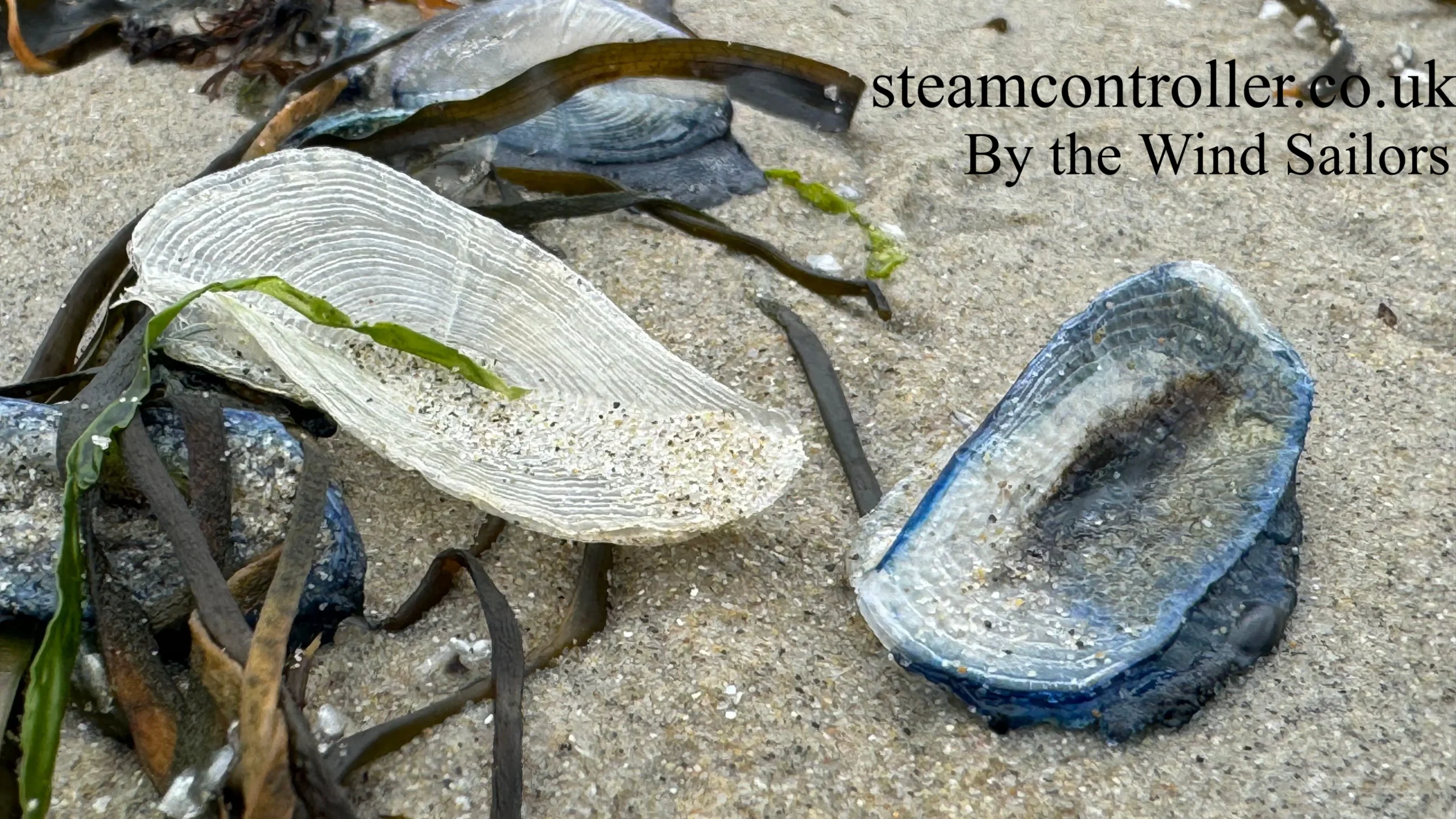
They are oval or teardrop shaped, usually measuring about three to four inches long. Their color ranges from deep blue to soft purple, which makes them easy to spot against wet sand. A clear, stiff sail sits diagonally across the top of their body, and this sail is exactly how they got their common name.
Unlike fish or squid, by the wind sailors cannot swim against the current. They rely completely on wind and water movement to travel, which means their entire life is shaped by the weather above the waves.
Are By The Wind Sailors Jellyfish?
This is one of the most common questions people ask, and the answer often surprises them. By the wind sailors are hydrozoans, not true jellyfish. True jellyfish belong to the class Scyphozoa, while by the wind sailors belong to the class Hydrozoa.
Here is a simple way to understand the difference.
- True jellyfish are single organisms with one body and one nervous system.
- By the wind sailors are colonies made of many smaller organisms living as one.
- True jellyfish usually swim by pulsing their bell shaped bodies through the water.
- By the wind sailors cannot swim at all and depend entirely on wind for movement.
So while by the wind sailors are jellyfish relatives, calling them a by the wind sailor jellyfish is not scientifically accurate. They share a distant family tree with jellyfish, corals, and sea anemones, but they live a completely different lifestyle.
How Do By The Wind Sailors Move?
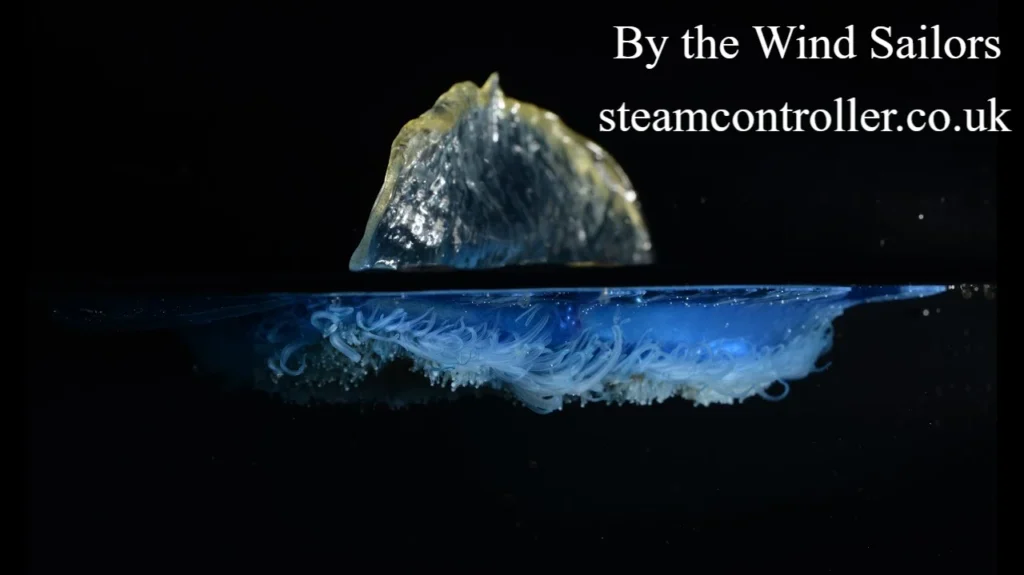
The sail is the secret behind their movement. This small, transparent structure sits at an angle on top of the body and catches passing wind, much like a sailboat catches a breeze. As wind pushes against the sail, the creature drifts across the ocean surface.
Interestingly, the sail can angle either to the left or the right, depending on the individual. This means that groups of by the wind sailors often split into two directions when the wind shifts, which helps spread the population across a wider area of ocean.
Because they have no way to control their direction on their own, by the wind sailors are completely at the mercy of wind patterns and ocean currents. This passive drifting lifestyle is actually quite common among plankton, and by the wind sailors are considered part of the larger plankton community that floats near the ocean surface.
What Do By The Wind Sailors Eat?
Even though they cannot swim or chase prey, by the wind sailors are still active predators in their own way. Short tentacles hang beneath their body in the water, and these tentacles contain stinging cells used to capture tiny prey.
Their diet mainly includes:
- Fish eggs
- Small fish larvae
- Zooplankton
- Other tiny drifting organisms
When prey brushes against the tentacles, the stinging cells fire and pull the small creature toward the mouth located underneath the body. It is a slow but effective way to feed while drifting with the current.
Can By The Wind Sailors Sting You?
If you are wondering whether by the wind sailors are dangerous, the good news is that they are generally harmless to humans. Their stinging cells are designed for tiny prey, not for larger animals like people.
Most people who touch them feel little to nothing at all. However, some individuals with sensitive skin may notice mild irritation, a bit of redness, or a slight tingling feeling. This reaction is usually much weaker than a typical jellyfish sting and tends to fade quickly.
I have personally handled a few of these creatures on the beach out of curiosity, and I barely felt anything at all. Still, it is a smart habit to avoid touching your eyes or face after handling one, just to be safe.
If you have particularly sensitive skin or known allergies to marine stings, it is wise to look at them without touching. When in doubt, admire from a distance rather than picking one up.
Why Are By The Wind Sailors Found On Beaches?
Every so often, beachgoers encounter massive strandings of by the wind sailors covering the shoreline for miles. These events are not random. They happen when strong onshore winds blow for several days in a row, pushing entire populations toward the coast.
Since by the wind sailors cannot fight against the wind, they get carried directly onto the sand once the wind direction shifts inland. This is why you might see thousands of them washed up after a period of stormy or windy weather.
Once stranded, they cannot return to the water on their own. Their bodies begin to dry out fairly quickly, and within a day or two, they lose their blue color and turn a pale, almost transparent white. This is a completely natural part of their life cycle, even though it can look unusual to someone walking the beach for the first time.
Where Do By The Wind Sailors Live?
By the wind sailors live in warm and temperate oceans around the world. They are commonly found floating far offshore, sometimes gathering in enormous rafts that stretch for miles across the open sea.
They tend to appear along coastlines during spring and summer months, particularly after seasonal wind patterns shift. Popular sightings often occur along the Pacific coast of North America, as well as parts of Europe, Australia, and other coastal regions with similar wind and current conditions.
Quick Facts About By The Wind Sailors
- Scientific name: Velella velella
- Classification: Hydrozoan, related to jellyfish
- Size: About three to four inches long
- Color: Blue to purple body with a clear sail
- Movement: Passive drifting powered by wind
- Diet: Tiny plankton, fish eggs, and larvae
- Sting: Mild and rarely harmful to humans
- Habitat: Open ocean surface worldwide
Frequently Asked Questions
What are by the wind sailors? By the wind sailors are small hydrozoan colonies that float on the ocean surface, using a stiff sail to catch the wind and drift across the sea.
Are by the wind sailors jellyfish? No, they are not true jellyfish. They are hydrozoans, which makes them close relatives of jellyfish rather than actual jellyfish.
Are by the wind sailors dangerous? Not usually. Their sting is generally mild and rarely causes any serious reaction in humans, though sensitive skin may feel slight irritation.
Why do by the wind sailors wash up on beaches? Strong, sustained winds push them toward the shore, and since they cannot swim against the current, they end up stranded on the sand.
What do by the wind sailors eat? They eat tiny plankton, fish eggs, and small fish larvae, capturing prey with short stinging tentacles beneath their body.
How big do by the wind sailors get? Most by the wind sailors grow to about three to four inches in length, making them small enough to fit in the palm of your hand.
Can you touch a by the wind sailor? Yes, in most cases it is safe to touch one, but washing your hands afterward and avoiding contact with your face is a good precaution.
How long do by the wind sailors live? Once stranded on a beach, they typically dry out and die within a day or two, since they cannot survive outside the water for long.
Final Thoughts
By the wind sailors are proof that some of the ocean’s most interesting creatures are also some of the smallest and simplest. They cannot swim, they cannot choose their direction, and yet they thrive across oceans worldwide by working with nature instead of against it.
Next time you spot these little blue drifters scattered across the sand, you will know exactly what you are looking at and why they ended up there. Have you ever come across by the wind sailors on a beach trip? Share your experience, and pass this article along to anyone who has ever wondered about these curious little sailors of the sea.
steamcontroller.co.uk
Author Name: Hamid Ali
Email: johanharwen314@gmail.com
About the Author: Hamid Ali is a content writer who enjoys exploring nature and ocean life topics, breaking down complex marine science into simple, easy to understand articles for curious readers everywhere.