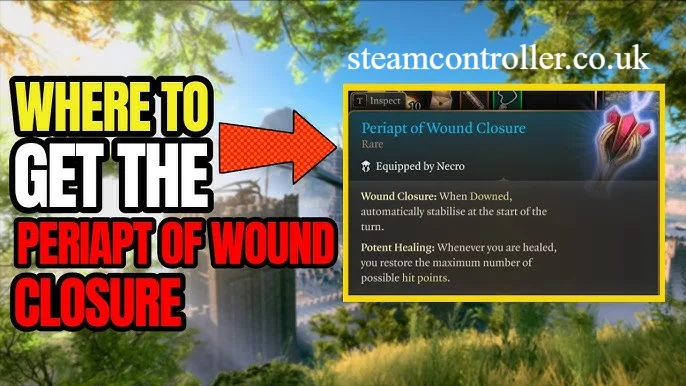
Introduction
Picture this. Your fighter drops to zero hit points in the middle of a brutal boss fight. The whole table holds its breath as you reach for a d20 to roll a death save. Now picture a world where that panic simply does not exist. That is exactly what the periapt of wound closure offers your character.
The periapt of wound closure is one of the most beloved defensive magic items in Dungeons and Dragons 5e. It is not flashy. It does not shoot fireballs or teleport you across the map. Instead, it quietly keeps you alive when everything else goes wrong. For many players, that quiet reliability makes it more valuable than half the items in the Dungeon Master’s Guide.
In this article, you will learn exactly what the periapt of wound closure does, how it works with death saves, how it boosts Hit Die healing, and how the item changed in the 2024 rules update. By the end, you will know whether this amulet deserves a spot around your character’s neck.
What Is the Periapt of Wound Closure?
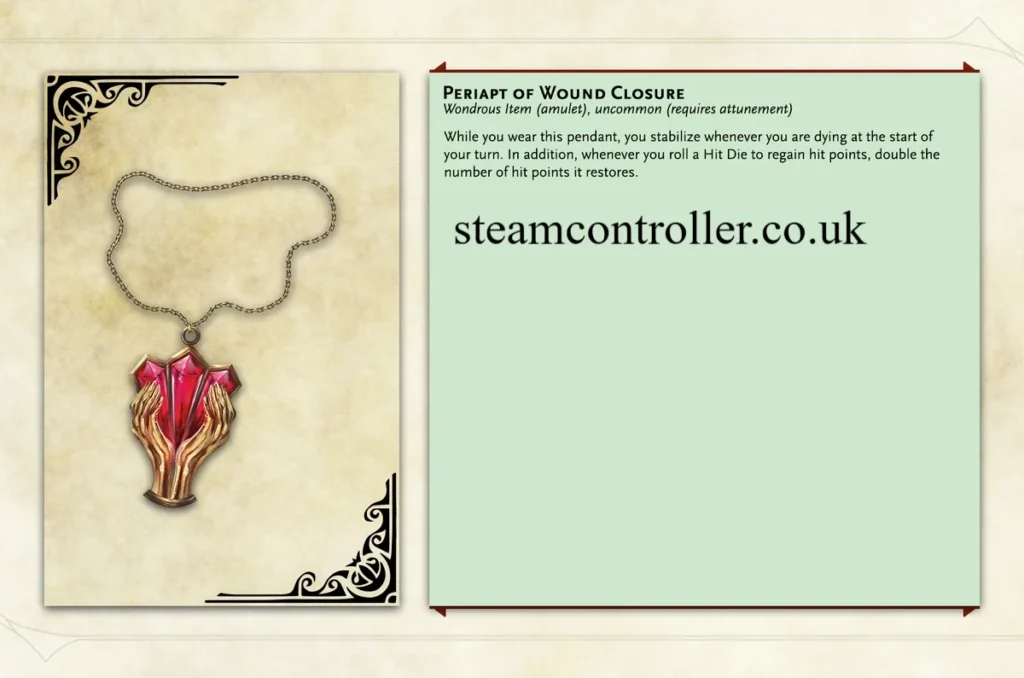
The periapt of wound closure is an uncommon wondrous item in D&D 5e. Like most wondrous items, it does not fall into the weapon or armor category. Instead, it is worn as jewelry, usually described as an amulet or medallion, and it requires attunement before it starts working.
Attunement means you cannot simply pick this item up and use it right away. Your character needs to spend a short rest bonding with the item before its magic activates. Once attuned, the periapt of wound closure becomes a permanent safety net for your character.
Because it is only uncommon in rarity, this item shows up fairly often in campaigns. Dungeon Masters love handing it out early because it gives new players confidence without breaking the game’s balance.
Quick Facts About This Magic Item
- Item type: Wondrous item
- Rarity: Uncommon
- Attunement: Required
- Category: Defensive support item
- Best suited for: Frontline fighters, barbarians, and any class that takes frequent hits
What Does the Periapt of Wound Closure Do?
This is the question most players search for, and the answer has two parts. The periapt of wound closure protects you in two very different situations. One happens when you are dying. The other happens when you are simply healing up between fights.
Automatic Stabilization When Dying
In the 2014 5e rules, the periapt of wound closure automatically stabilizes you the moment you start your turn while dying. You do not roll a death save. You do not need a healer nearby. You do not need luck. The magic simply does its job.
This single feature has saved countless characters from permanent death. Think about how many times a party healer was too far away or too busy dealing with their own problems. With this periapt equipped, that scenario becomes far less terrifying.
Doubled Healing From Hit Dice
The second effect of the periapt of wound closure is just as useful, though it gets less attention. Whenever you roll a Hit Die to regain hit points, the healing you receive is doubled.
This might sound small, but it adds up fast. A barbarian with a d12 Hit Die who rolls a 7 would normally heal 7 hit points plus their Constitution modifier. With the periapt of wound closure active, that same roll heals 14 points plus the modifier. Over the course of a short rest, that difference can mean skipping several rounds of danger entirely.
Periapt of Wound Closure Healing Versus Spell Healing
A lot of players wonder how Hit Die healing compares to spell or potion healing. Understanding the difference helps you see why the periapt of wound closure is such a strong pick for melee characters.
Hit Die Healing
- Used during a short rest
- Limited by how many Hit Dice your character has
- Recovers slowly over long rests
- Boosted directly by the periapt of wound closure
Spell and Potion Healing
- Used any time, often in combat
- Not limited by Hit Dice
- Depends on spell slots or item availability
- Not affected by the periapt of wound closure at all
Here is the key takeaway. The periapt of wound closure does not touch cure wounds, healing potions, or any other magical healing source. It only affects Hit Dice. That means it works best for characters who burn through Hit Dice constantly, like frontline fighters and barbarians who take the brunt of every encounter.
I have played a barbarian who relied on this exact combo. Doubling Hit Die healing during short rests meant I rarely needed the party’s limited healing spells, which freed up resources for allies who needed them more.
Why This Item Shines During Short Rests
Short rests are where the periapt of wound closure truly earns its keep. Classes that spend multiple Hit Dice after a tough fight benefit the most. Fighters, barbarians, and paladins often chew through several Hit Dice in a single short rest just to stay standing.
With doubled healing, you recover faster and save Hit Dice for later fights. This keeps your character combat ready without draining the party’s spell slots. For long dungeon crawls with several encounters and few chances for a long rest, this efficiency becomes a real lifesaver, both literally and figuratively.
The 2024 Rules Change
D&D 5e received a major rules refresh in 2024, and the periapt of wound closure changed along with it. In the updated version, the item no longer automatically stabilizes you every single time.
Instead, when you roll a death save and get a result of 9 or lower, you may change that roll to a 10. This still gives you a strong safety net, since a natural 10 or higher on a death save counts as a success. However, it is no longer a guaranteed stabilization the moment your turn begins.
This shift adds a small layer of tension back into near death moments while still making the periapt of wound closure one of the safest items to wear in dangerous fights. The doubled Hit Die healing effect remains unchanged in the new rules.
Is the Periapt of Wound Closure Worth Using?
For most melee focused characters, the answer is a clear yes. Here is a simple breakdown to help you decide.
- If your character often drops to zero hit points, this item reduces the risk of permanent death.
- If your character relies heavily on Hit Dice during short rests, the doubled healing saves valuable time.
- If your Dungeon Master allows uncommon wondrous items, this periapt is an easy request that will not unbalance the campaign.
- If your class already has strong self healing, like a paladin with lay on hands, the benefit may feel smaller but still useful.
Squishier spellcasters who rarely enter melee range will get less value from this item. Their limited attunement slots are often better spent elsewhere.
Conclusion
The periapt of wound closure is a simple, reliable magic item that quietly changes how safe your character feels at the table. Whether you are using the classic 2014 version with automatic stabilization or the updated 2024 version with its death save adjustment, this wondrous item continues to protect players from tragic, unlucky rolls. Add in the doubled Hit Die healing during short rests, and you have an item that supports your character both in the heat of battle and in the quiet moments right after.
If your character spends a lot of time on the front lines, consider asking your Dungeon Master about adding a periapt of wound closure to your next loot pile. Have you used this item in your own campaign? Share your story with your group and see how many close calls it has saved you from.
Frequently Asked Questions
What is the periapt of wound closure? It is an uncommon wondrous magic item in D&D 5e that requires attunement and helps protect your character from dying.
What does the periapt of wound closure do in 2014 rules? It automatically stabilizes you at the start of your turn whenever you are dying, removing the need for death saves.
What does the periapt of wound closure do in 2024 rules? It lets you change a death save roll of 9 or lower into a 10, rather than giving automatic stabilization.
Does the periapt of wound closure increase healing? Yes. It doubles the hit points you regain whenever you roll a Hit Die.
Does the periapt of wound closure affect spell healing? No. It only affects healing gained from rolling Hit Dice, not from spells or potions.
Who benefits most from the periapt of wound closure? Frontline classes like fighters, barbarians, and paladins benefit the most because they use Hit Dice often and take frequent hits.
Is the periapt of wound closure rare? No. It is classified as an uncommon item, making it easier for Dungeon Masters to include in a campaign.
Do I need attunement for the periapt of wound closure? Yes. You must attune to this item before its effects become active.
Can spellcasters use the periapt of wound closure? Yes, though the benefits are usually smaller since spellcasters spend fewer Hit Dice and stay out of melee more often.
Is the periapt of wound closure good for short rests? Absolutely. Its doubled Hit Die healing makes short rests far more effective for classes that rely on them.
steamcontroller.co.uk
Author Name: Hamid Ali
Email: johanharwen314@gmail.com
About the Author: Hamid Ali is a tabletop gaming writer who enjoys breaking down D&D 5e rules, magic items, and character strategies for players of all experience levels. He has spent years running and playing campaigns, and he loves helping fellow adventurers ge