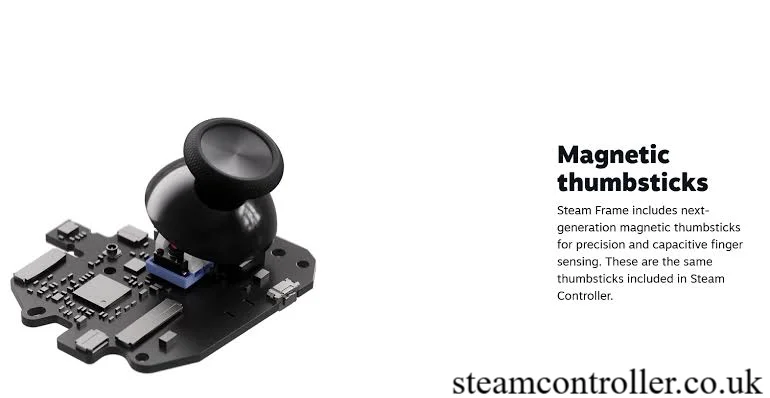
Valve has officially launched the Steam Frame News, its new wireless VR headset designed to combine standalone gaming with PC-based Steam streaming. The headset became available on Steam on September 14, 2026, with a starting price of $1,059 in the United States. A higher-capacity 1TB version starts at $1,299.
Unlike a traditional PC VR headset that depends entirely on a powerful computer, the Steam Frame can also run compatible games locally. It uses a Qualcomm Snapdragon 8 Gen 3 processor, 16GB of LPDDR5X memory, SteamOS and Valve’s software layers to make PC games work on ARM hardware.
The biggest story around the device, however, is its wireless PC VR technology. Valve combines eye tracking, a dedicated wireless connection and foveated streaming to reduce the amount of high-resolution video that needs to be transmitted from a gaming PC.
Here’s what you need to know about Valve’s latest virtual reality hardware.
What Is Steam Frame?
Steam Frame is Valve’s new standalone and wireless VR headset that can run selected games locally or stream a much larger portion of the Steam library from a PC.
The device represents a different approach from Valve’s older Index headset. Instead of requiring a wired connection to a computer, the Steam Frame can operate independently or connect wirelessly to a gaming PC.
Its standalone hardware includes a Snapdragon 8 Gen 3 processor and 16GB of LPDDR5X RAM. Valve also uses SteamOS, Proton and FEX translation technology to make software designed for x86 Windows PCs usable on its ARM-based hardware.
That makes the Steam Frame more than a conventional VR gaming headset. It is effectively a compact gaming computer built around a VR display and wireless streaming system.
Steam Frame Price and Release
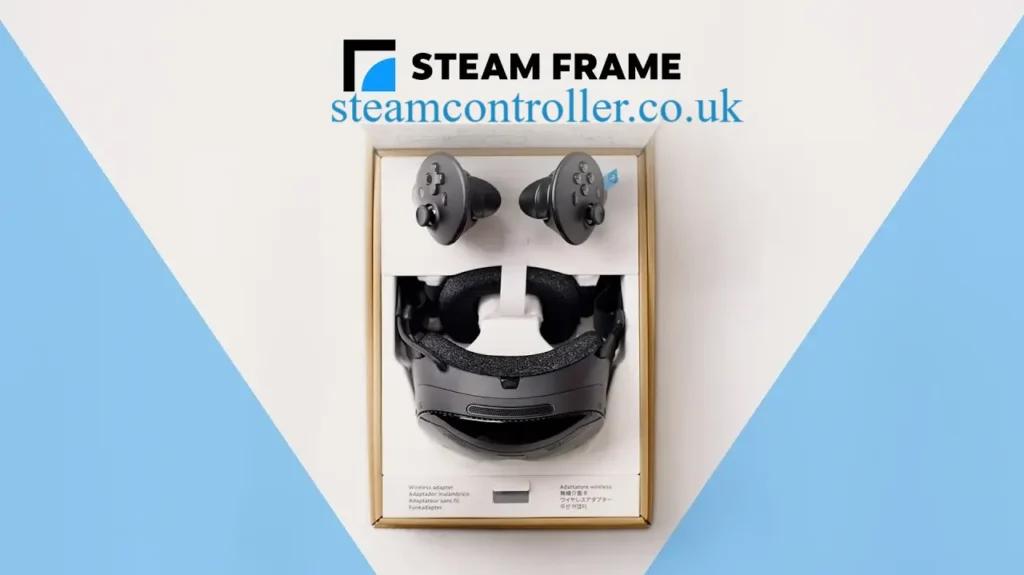
The Steam Frame release is now underway, with Steam listing the device from September 14, 2026. The US starting price is $1,059 for the 256GB model, while the 1TB configuration costs $1,299.
| Model | Storage | US starting price |
|---|---|---|
| Steam Frame | 256GB | $1,059 |
| Steam Frame | 1TB | $1,299 |
Valve has also offered additional accessories, including an Ergonomic Accessories Kit and replacement parts.
So, if you’re searching how much does Steam Frame cost, the short answer is $1,059 for 256GB or $1,299 for 1TB in the US.
The price is considerably above mainstream standalone VR options such as the Meta Quest 3. Valve has said component costs, including memory, affected the final price.
What Is the Steam Frame 1TB Price?
The Steam Frame 1TB price is $1,299 in the United States. The larger storage option makes more sense for users who plan to install compatible standalone games rather than relying primarily on PC streaming.
What Is the Steam Frame 256GB Price?
The 256GB Steam Frame costs $1,059 in the US. It provides the same core headset platform while reducing internal storage compared with the 1TB model.
Steam Frame Specs
The hardware is one of the most important parts of the latest Steam Frame news.
| Feature | Steam Frame |
|---|---|
| Processor | Qualcomm Snapdragon 8 Gen 3 |
| RAM | 16GB LPDDR5X |
| Storage | 256GB or 1TB |
| Expansion | microSD |
| Display | LCD |
| Resolution | 2160 × 2160 per eye |
| Refresh rate | 72Hz, 120Hz, up to 144Hz experimental |
| Lenses | Pancake |
| Horizontal FOV | Up to 110 degrees |
| Tracking | 6DoF |
| Wireless | Wi-Fi 7 |
| Battery | 21.6Wh |
| Weight with strap | About 440g |
| Operating system | SteamOS 3 |
These specifications come from testing and technical information published by Tom’s Hardware.
The combination of pancake optics and 2160 × 2160 resolution per eye is particularly important because it puts the Steam Frame’s visual system in the same broad conversation as other modern standalone headsets.
Steam Frame Display and Pancake Lenses
The headset uses two LCD panels with 2160 × 2160 resolution per eye and pancake lenses.
Pancake optics help create a relatively compact headset while providing a clearer viewing area than older Fresnel-based designs. The Steam Frame can reach a horizontal field of view of about 110 degrees.
Its refresh-rate options include 72Hz and 120Hz, while 144Hz is currently described as experimental.
For users comparing the Steam Frame with the Meta Quest 3, the resolution and pancake-lens approach make the two devices particularly relevant comparisons, although their operating systems, processors and wireless strategies are different.
Steam Frame PC Streaming: The Big Feature
Steam Frame PC streaming is one of Valve’s most important features because it allows demanding PC games to be played wirelessly.
The headset has Wi-Fi 7 connectivity, while Valve also provides a dedicated Wi-Fi 6E dongle that connects to a gaming PC.
The idea is straightforward:
- Your gaming PC renders the game.
- The video is compressed and transmitted wirelessly.
- The Steam Frame receives the stream.
- The headset displays the game while sending tracking and input information back.
The dedicated wireless connection is designed to reduce latency and avoid placing the entire streaming workload on a normal home Wi-Fi network. Tom’s Hardware reported strong wireless performance during its testing.
This is why the device can potentially provide access to demanding PC VR games without requiring a physical cable.
How Steam Frame Foveated Streaming Works
Foveated streaming uses eye tracking to prioritize the area you’re actually looking at.
The headset’s internal cameras monitor eye position. When you look toward a particular part of the virtual scene, that area receives higher-quality streaming data, while areas in your peripheral vision can be transmitted at lower quality.
This can reduce the amount of bandwidth required for wireless VR.
Valve developers explained that the technique allows available network and encoding resources to be concentrated on the parts of the image that matter most at that moment.
This is different from traditional foveated rendering. With rendering, the graphics system changes how different areas of a scene are rendered. With foveated streaming, the technique is primarily concerned with how the already-rendered video is transmitted to the headset.
Steam Frame Games and Performance
The Steam Frame supports two major gaming approaches: native games and streamed PC games.
In standalone mode, the Snapdragon processor runs compatible software locally. Valve uses FEX emulation and Proton to help run x86 Windows games on ARM hardware.
Testing has shown that Half-Life: Alyx can run natively on the headset following Valve’s ARM64 port. The game is also included with the Steam Frame.
However, standalone performance can vary by game. Streaming from a powerful gaming PC remains the more suitable route for demanding PC VR titles, while native play provides the advantage of not needing a separate computer.
Steam Frame Half-Life Alyx
Half-Life: Alyx is one of the headline games for the platform.
Valve ported the VR game to ARM64 so it can run directly on the Steam Frame. The port uses the headset’s Snapdragon hardware alongside Valve’s software optimization work.
The game is also included with the headset, making it an important demonstration of what Valve wants native Steam Frame VR games to achieve.
Steam Frame Battery Design
The headset has a 21.6Wh battery integrated into the rear portion of its strap. Moving some of the battery weight behind the head helps balance the headset rather than concentrating everything at the front.
Battery life depends heavily on how the headset is being used.
During Tom’s Hardware testing, native VR gaming could produce around an hour of runtime in demanding scenarios, while PC streaming could last more than twice as long in some situations because the headset’s processor does not have to perform the same level of game processing.
That means battery expectations should be based on the type of gaming you plan to do rather than a single universal number.
Steam Frame Comfort
Comfort is another area where early reviews have been positive.
The headset and strap weigh around 440 grams together, with the rear battery helping distribute the weight. Tom’s Hardware reported that its balanced design and padding helped reduce fatigue during longer sessions.
PC Gamer also highlighted the device’s lightweight design and ergonomics in its review.
Comfort can still vary between users because facial shape, strap adjustment and the fit of the facial interface all affect long-term VR use.
Steam Frame Controllers
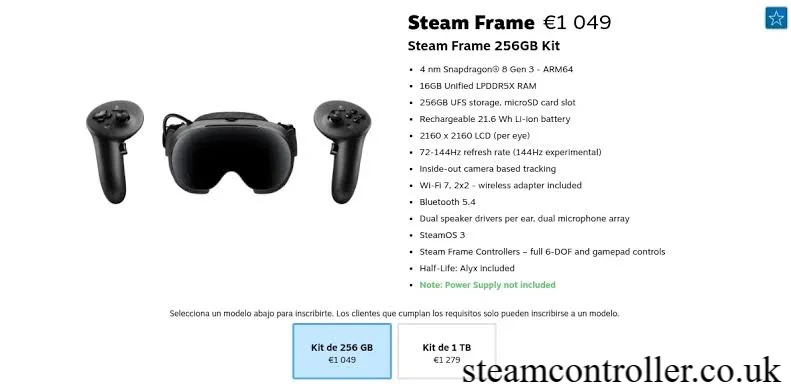
The headset comes with two wireless controllers.
Each controller provides 6DoF tracking, haptic feedback, capacitive finger sensing and traditional gamepad controls. Each controller uses a single AA battery, with Valve rating the battery life at roughly 40 hours.
The controllers are designed for both VR interaction and conventional game controls, which fits the Steam Frame’s broader goal of handling different types of Steam games.
Steam Frame vs Quest 3 and Other VR Headsets
The Steam Frame occupies an unusual position in the VR market.
The Meta Quest 3 is more established as a mainstream standalone headset, while the PlayStation VR2 is closely associated with PlayStation hardware. The Steam Frame instead puts heavy emphasis on the Steam ecosystem and wireless PC gaming.
The comparison becomes clearer when looking at the primary use case:
| Headset | Main focus |
|---|---|
| Steam Frame | Steam gaming, PC streaming and standalone VR |
| Meta Quest 3 | Standalone VR and optional PC VR |
| Meta Quest 3S | Lower-cost standalone VR |
| PlayStation VR2 | PlayStation 5 VR |
| Apple Vision Pro | Spatial computing and mixed reality |
The Steam Frame’s differentiator is therefore not simply display resolution. Its combination of SteamOS, ARM-based standalone gaming, wireless PC streaming and foveated streaming gives it a distinct technical approach.
Is Steam Frame Worth It?
Whether the Steam Frame is worth the price depends heavily on what you want from a VR headset.
For someone primarily interested in wireless PC VR gaming, the dedicated streaming technology, eye tracking and Steam integration are important advantages. Review testing has also highlighted its lightweight design and wireless performance.
For someone looking for an inexpensive introduction to VR, the $1,059 starting price places it in a substantially higher price category than mainstream alternatives.
The Steam Frame is therefore easiest to understand as a premium device aimed at people who specifically value the Steam ecosystem, wireless PC VR and the ability to run selected games without a computer.
What Makes Steam Frame Different?
Several technologies distinguish Valve’s headset:
- Wireless PC VR: Dedicated wireless hardware is designed for low-latency game streaming.
- Foveated streaming: Eye tracking helps prioritize the part of the image you’re viewing.
- Standalone gaming: Compatible games can run directly on the headset.
- SteamOS: Valve’s Linux-based operating system powers the device.
- ARM compatibility: FEX and Proton help bring PC software to the Snapdragon platform.
- Pancake lenses: The optical design supports a compact headset with a broad viewing area.
- MicroSD support: Users can expand storage beyond the built-in capacity.
Together, these features make the Steam Frame more than a conventional wired Valve VR headset.
Steam Frame News: What Comes Next?
The launch is only the beginning of Valve’s plans for the platform.
Valve has discussed modular accessories and future upgrades, including an Enthusiast Kit that could add features such as enhanced audio and extended battery capacity. A separate Arcturus Vision Camera is also available for color passthrough and spatial video features.
The software side may ultimately be just as important as the hardware. Valve’s work on Proton, FEX and SteamOS could make it easier for developers to bring more games to the ARM-based platform.
For now, the biggest question surrounding the Steam Frame is not whether it introduces interesting VR technology. It is how quickly its native software library develops and how well Valve continues improving the experience after launch.
Steam Frame FAQs
What is Steam Frame?
Steam Frame is Valve’s wireless and standalone VR headset. It can run compatible games locally and stream games from a PC over a dedicated wireless connection.
How much does Steam Frame cost?
The Steam Frame starts at $1,059 for the 256GB model in the US. The 1TB version starts at $1,299.
What is the Steam Frame release date?
The Steam store lists September 14, 2026 as the Steam Frame release date.
Is Steam Frame worth it?
Its value depends on your needs. The device combines wireless PC VR, standalone gaming and Steam integration, but its $1,059 starting price makes it a premium VR purchase.
Can Steam Frame play PC games?
Yes. Steam Frame can stream PC games wirelessly and can also run compatible PC games locally through Valve’s software compatibility technology.
How does Steam Frame foveated streaming work?
It uses eye tracking to identify where you’re looking and prioritizes image quality in that area during wireless streaming, helping reduce bandwidth requirements.
What is the Steam Frame 1TB price?
The 1TB model starts at $1,299 in the United States.
What is the Steam Frame 256GB price?
The 256GB model starts at $1,059 in the United States.
Can Steam Frame run Half-Life: Alyx?
Yes. Valve has ported Half-Life: Alyx to ARM64 so it can run natively on the Steam Frame, and the game is included with the headset.
How long does the Steam Frame battery last?
Battery life varies considerably by workload. Testing has found shorter runtimes during demanding native VR gaming and longer runtimes when streaming games from a PC.
Does Steam Frame use pancake lenses?
Yes. The Steam Frame uses pancake lenses with dual 2160 × 2160 LCD displays.
What games can you play on Steam Frame?
You can play compatible native games directly on the headset and stream a much larger selection of PC games from Steam. Compatibility varies by game and performance mode.
Is Steam Frame wireless?
Yes. It supports wireless PC streaming and includes dedicated wireless technology intended to provide a low-latency connection between the headset and a gaming PC.
How much storage does Steam Frame have?
Valve offers 256GB and 1TB internal storage configurations, and the headset also supports microSD expansion.
Who is Steam Frame for?
The headset is primarily aimed at users interested in premium Steam gaming, wireless PC VR, standalone gaming and Valve’s approach to next-generation VR technology.
Author Bio: Hamid Ali is a technology and gaming writer covering VR, PC gaming, hardware, and emerging gaming technology. He focuses on clear, accurate, and useful insights to help readers understand the latest products and trends.
Author Name: Hamid Ali
Email: johanharwen314@gmail.com
Also Read: